◢ The stack

◢ The build · 4 steps · 8 min
Follow these in order. Don't skip.
01
Step 01 / 04
Sign up + grab your API key
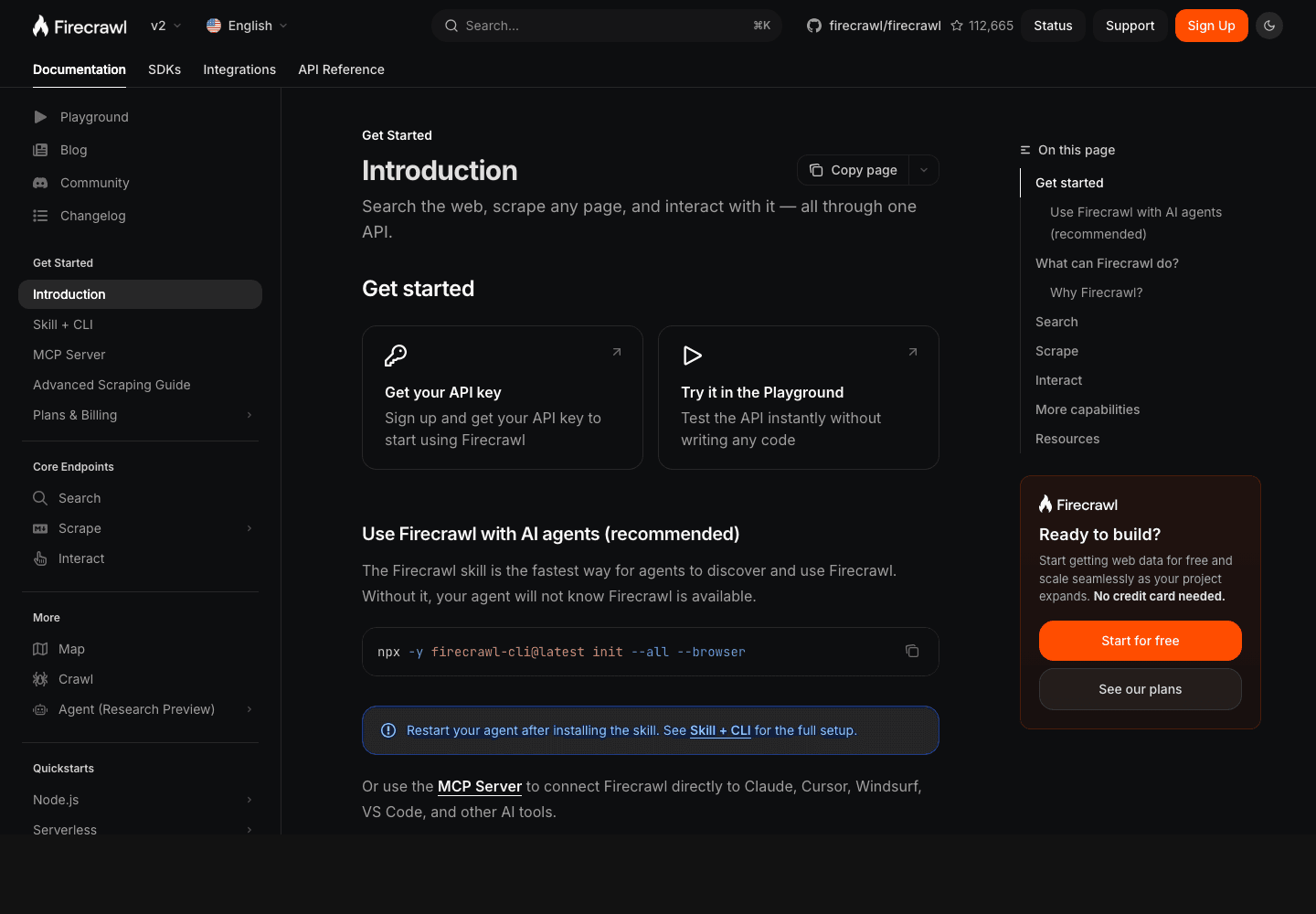
STEP 01
.env.local
1FIRECRAWL_API_KEY=fc-...02
Step 02 / 04
Scrape one URL → clean markdown
Terminal · install
1npm install @mendable/firecrawl-jssrc/lib/firecrawl.ts
1import FirecrawlApp from "@mendable/firecrawl-js";2 3const fc = new FirecrawlApp({ apiKey: process.env.FIRECRAWL_API_KEY! });4 5export async function scrape(url: string) {6 const res = await fc.scrapeUrl(url, {7 formats: ["markdown", "links"],8 onlyMainContent: true,9 });10 if (!res.success) throw new Error(res.error || "scrape failed");11 return {12 markdown: res.markdown ?? "",13 links: res.links ?? [],14 title: res.metadata?.title,15 };16}03
Step 03 / 04
Crawl a whole site
When you need every product page, every doc page, every blog post — start a crawl, poll for completion.
src/lib/firecrawl.ts (additions)
1export async function crawl(url: string, opts: { limit?: number } = {}) {2 const job = await fc.crawlUrl(url, {3 limit: opts.limit ?? 50,4 scrapeOptions: { formats: ["markdown"], onlyMainContent: true },5 });6 if (!job.success) throw new Error(job.error || "crawl failed");7 return job.data; // array of pages8}04
Step 04 / 04
Hand it to your agent
The whole point: your agent gets clean text, not HTML soup.
src/app/api/agent/research/route.ts
1import OpenAI from "openai";2import { scrape } from "@/lib/firecrawl";3 4const ai = new OpenAI({ apiKey: process.env.OPENAI_API_KEY });5 6export async function POST(req: Request) {7 const { url, question } = await req.json();8 const page = await scrape(url);9 10 const completion = await ai.chat.completions.create({11 model: "gpt-5-mini",12 messages: [13 {14 role: "system",15 content:16 "You answer questions strictly from the provided page content. Cite the source URL.",17 },18 {19 role: "user",20 content: `URL: ${url}\n\nPAGE:\n${page.markdown.slice(0, 12000)}\n\nQUESTION: ${question}`,21 },22 ],23 });24 25 return Response.json({26 answer: completion.choices[0].message.content,27 source: url,28 });29}◆ You're done when
Pattern: scrape → trim to 12k chars → pass as context. This single recipe powers competitive intel, doc Q&A, lead enrichment, content analysis.
◆ Ship-it checklist
4 CHECKS
- Firecrawl key in .env.local AND Vercel
- src/lib/firecrawl.ts exports scrape() and crawl()
- An /api/agent/research endpoint that takes URL + question
- Tested against 3 different sites (a SPA, a login-walled site, a static blog)